
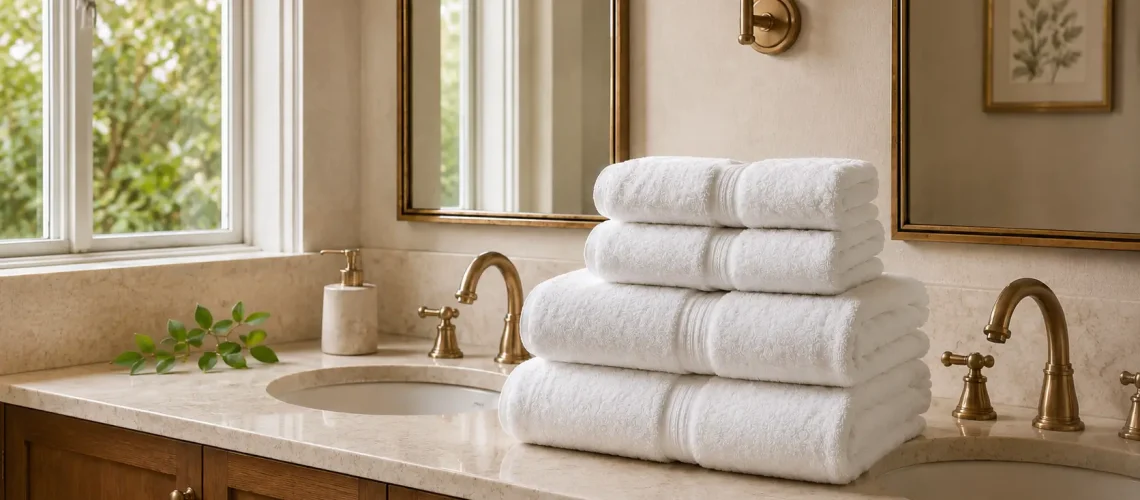
Most people have used both kinds of towels. One leaves your hands dry almost immediately. The other looks perfectly fine hanging beside the sink but somehow leaves your hands almost as wet as they were before.
Usually, that comes down to one simple thing: not all towels are made for the same job.
Some are made to look decorative. Some are designed to feel extra soft. Some are lightweight and quick drying. Others are made to absorb as much water as possible. A towel can look perfectly suited to the bathroom and still be frustratingly poor at drying your hands.
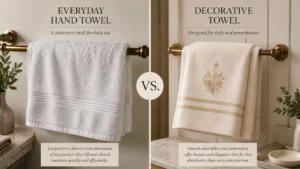
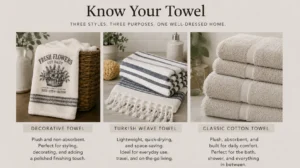
For everyday use, the most dependable option is usually a cotton terry towel. This is the classic towel most people picture when they think of a bath towel. Its surface is covered with small loops that come into contact with the water and pull it into the fabric.
A well-made terry towel usually feels soft without feeling slick. It may not be the most decorative option on the shelf, but it tends to do the job people expect a towel to do.
Then there are the towels that just simply look nice.
Many decorative towels have embroidery, printed designs, smooth woven sections, fringed edges, or velvety finishes that make them appealing on a towel bar. They can be a good way to bring color or pattern into a bathroom, especially in a guest space where appearance matters.
But many of them are not especially absorbent compared with a simple cotton terry towel.
These are the towels that can make you dry your hands, look down, and think, “This towel is terrible. My hands are still wet.”
That does not necessarily mean the towel is poorly made. It may simply have been designed with appearance in mind more than everyday drying performance. Decorative stitching and smooth fabric can reduce the amount of absorbent surface available, particularly when much of the front of the towel is covered by a design.
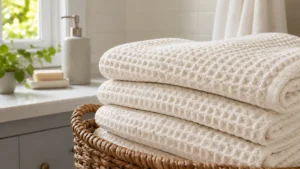
Another common option is waffle weave. These towels have a flatter, textured pattern instead of thick terry loops. The small, raised squares and recessed areas help create surface area while keeping the fabric relatively light.
Waffle towels usually do not feel as plush as terry, but many people like them because they dry faster between uses and take up less space. They can work especially well in kitchens, powder rooms, and bathrooms where towels are used frequently throughout the day.
They also tend to become softer after repeated washing. A new waffle towel may feel slightly stiff or less absorbent at first, but its texture often relaxes with use.
Then there are the extra-soft, plush towels that feel luxurious in the store.
The same basic rules apply whether you are buying a washcloth, hand towel, or bath towel. Softness does not automatically mean absorbency. Some plush towels absorb water beautifully. Others are so dense or heavily treated that they feel impressive but take longer to dry and may not perform as well as expected.
A towel that stays damp for hours can begin to smell musty, especially when it is hanging from a narrow hook, layered against another towel, or used several times in a busy bathroom. Damp fabric creates better conditions for bacteria, mildew, and odors to develop.
That is why a thick towel that feels luxurious at first can become unpleasant if it never dries fully between uses. In humid rooms or households where towels are used often, a slightly lighter towel may be the more practical choice.
Material matters too.
Cotton remains one of the most common towel materials because it is naturally absorbent and comfortable against the skin. Long-staple cotton varieties are often used in softer, more durable towels because the longer fibers can produce smoother yarn with less lint.
Cotton blends may dry faster and hold their shape well, but their absorbency can vary depending on how much synthetic material is included. Microfiber towels dry quickly and can absorb a surprising amount of moisture, although some people dislike the way they feel against the skin.
Bamboo-derived fabrics are often marketed as especially soft, but shoppers should still look at the full fiber label. Many products described as bamboo are blended with cotton or made from rayon produced from bamboo rather than woven directly from natural bamboo fibers.
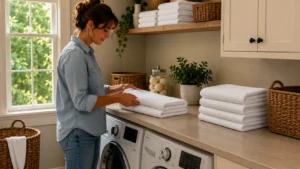
The way a towel is finished can also affect how it performs when new.
Some towels are treated to feel especially smooth and soft on the shelf. That finish can make them more appealing when you touch them in the store, but it may temporarily interfere with absorbency. A new towel may need to be washed a few times before it begins working as well as expected.
Fabric softener can create the same problem at home.
Softener works by leaving a coating on the fibers. That coating may make the towel feel smoother, but it can also make it harder for the fabric to take in water. Dryer sheets may leave similar residue over time.
If towels that once worked well have started leaving your hands damp, buildup may be part of the problem.
When shopping, it helps to stop judging towels by softness alone and think instead about how they will actually be used.
For a dependable everyday towel, cotton terry is usually the safest choice.
For something lighter that dries more quickly, waffle weave may be a better fit.
For a decorative guest towel, appearance may matter more than absorbency, but it helps to recognize that tradeoff before expecting it to perform like terry.
For plush towels, look for a balance between softness, absorbency, and drying time rather than choosing the thickest option automatically.
And if your current towels no longer seem to work well, replacing them may not be the first answer. Washing them without fabric softener, using a little vinegar occasionally to help remove residue, and giving them enough space to dry fully can make a noticeable difference.
A good towel does more than feel nice in your hands. It should actually do its job. The best ones are not just soft. They are absorbent, breathable, and ready to work every time you reach for them.